
Visa regulations and different legal provisions
Travel documentation On December 8, 2022, the member states of the European Union (EU) unanimously approved Croatia’s entry into Schengen from January 1, 2023. The Schengen area allows more than 400 million people to travel freely between member countries without going through border controls. The entry of Istria/Croatia into the Schengen area means the abolition […]
Travel documentation On December 8, 2022, the member states of the European Union (EU) unanimously approved Croatia’s entry into Schengen from January 1, 2023. The Schengen area allows more than 400 million people to travel freely between member countries without going through border controls. The entry of Istria/Croatia into the Schengen area means the abolition of border controls between Croatia and the 22 member states of the European Union as well as four countries outside the EU: Iceland, Liechtenstein, Norway and Switzerland.
From January 1, 2023, travel within the Schengen member states will be carried out without border control at land and sea crossings, while controls at airports will be carried out until March 26, 2023.
Entering Croatia from countries that do not belong to the Schengen area is possible upon presentation of an identity card, a valid passport or a valid visa. Tourists may remain in Croatia for up to three months.
Visas Generally, citizens of European countries, regardless of whether their countries are Member States of the EU or not, do not need a visa to come to Croatia. The only exceptions to this rule are the Russian Federation, Belarus and the Republic of Turkey. Citizens of most non-European countries will probably need to obtain a visa pursuant to the agreements concluded between Croatia and their country. Further information about the visa regime between the Republic of Croatia and all other countries is available at: Visa requirements overview
Customs The Customs regulations of the Republic of Croatian are in line with the regulations of the European Union. When entering Croatia, passengers and visitors are entitled to bring in personal baggage, including foods, drugs, weapons and other goods in accordance with that prescribed by the customs regulations. Detailed instructions and information about carrying certain objects, plants, animals into Croatia can be found on the Ministry of Customs and Finance Administration’s website: www.carina.gov.hr.
Registration When you check in a hotel, hostel, campsite or an apartment, you will automatically be registered in the eVisitor system, a matter required by law.
✨Similar Content

Camino Fažana
The Camino in Fažana, Croatia, offers pilgrims and hikers alike an opportunity to explore the stunning landscapes and cultural heritage of or charming little town.
Cycling
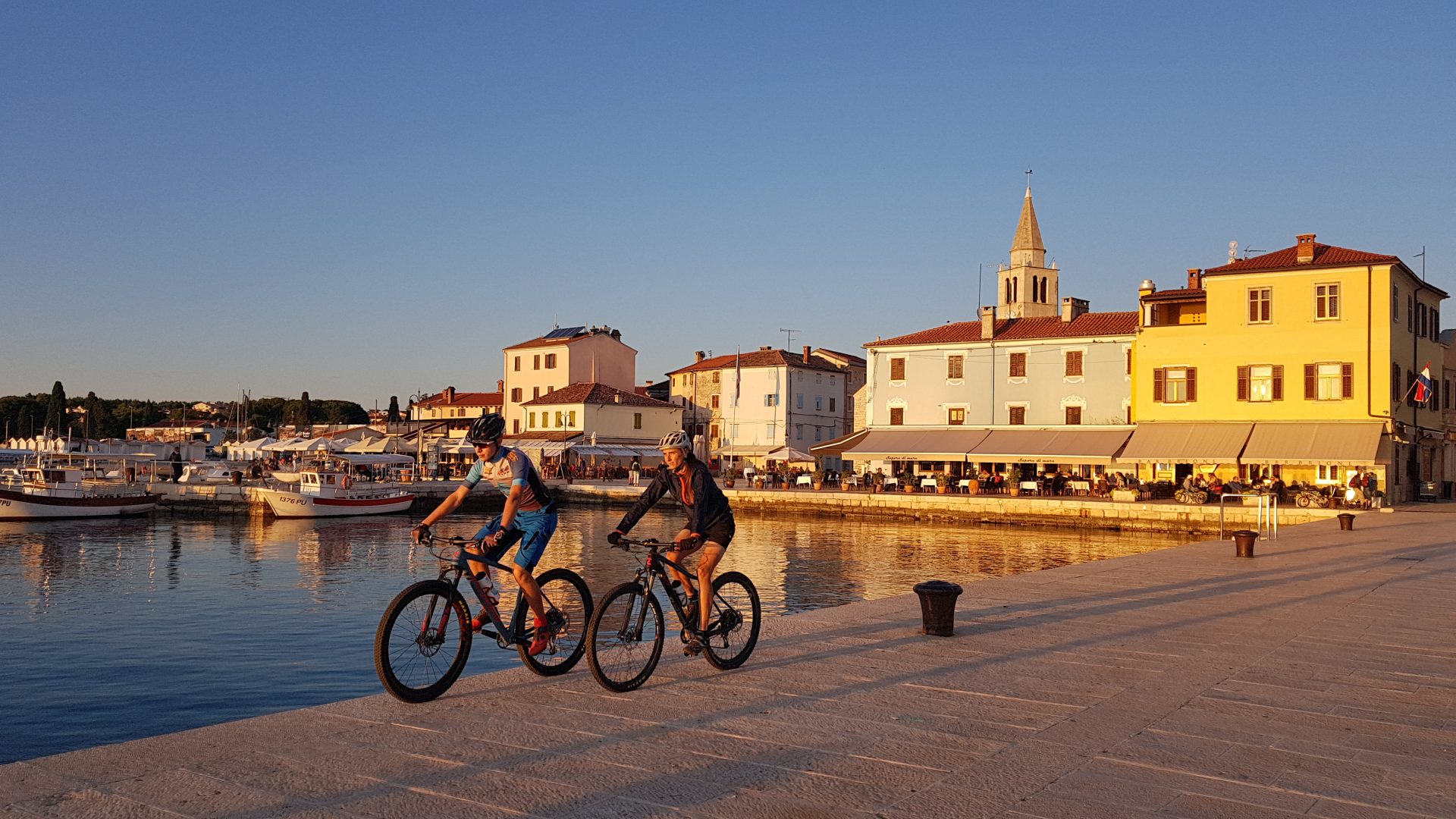
Experience Fažana through cycling. The two bike trails; 301 Vasianum and 302 St. Eliseus take you away from the hustle and bustle of everyday life and offer a different view of Fažana and its surroundings. The bike trails change from paved roads, and promenade passing along the crystal-clear sea of Fažana onto macadam roads surrounded \[…\]

Brijuni National Park
Brijuni National Park is an oasis of the magnificent harmony between man, animal and plant life.

The Boathouse
The Presentation and Education Centre of the Brijuni National Park has been opened at the Boathouse. This new permanent display is presented in an innovative and interactive manner and it is meant for the visitors to independently explore, learn and find out about the cultural, historic and natural heritage of the archipelago. The Boathouse is \[…\]

Excursion to Brijuni National Park
How to visit the Brijuni National Park? To visit the National Park, you have to board a boat in the small town of Fažana. In the center of the town, there is a jetty from which the ship departs, and before boarding it is necessary to buy tickets at Brijuni National Park office in Fažana, \[…\]

Historical and cultural heritage
“When on the Istrian island of Brijuni all the yet unexplored and mostly inaccessible monuments from all ages, from the early periods of the pre-Roman Istria until the 16th century, will be discovered and made accessible to research then this beautiful island will be a unique museum rich in architectural inventory of high artistic and \[…\]